Do I Need Branding Before I Even Have Customers? Here's the Honest Answer
A direct answer for first-time founders in India: what branding actually matters before your first customer, and what can wait.
Nidhi Dhruv
Founder | Brand Consultant
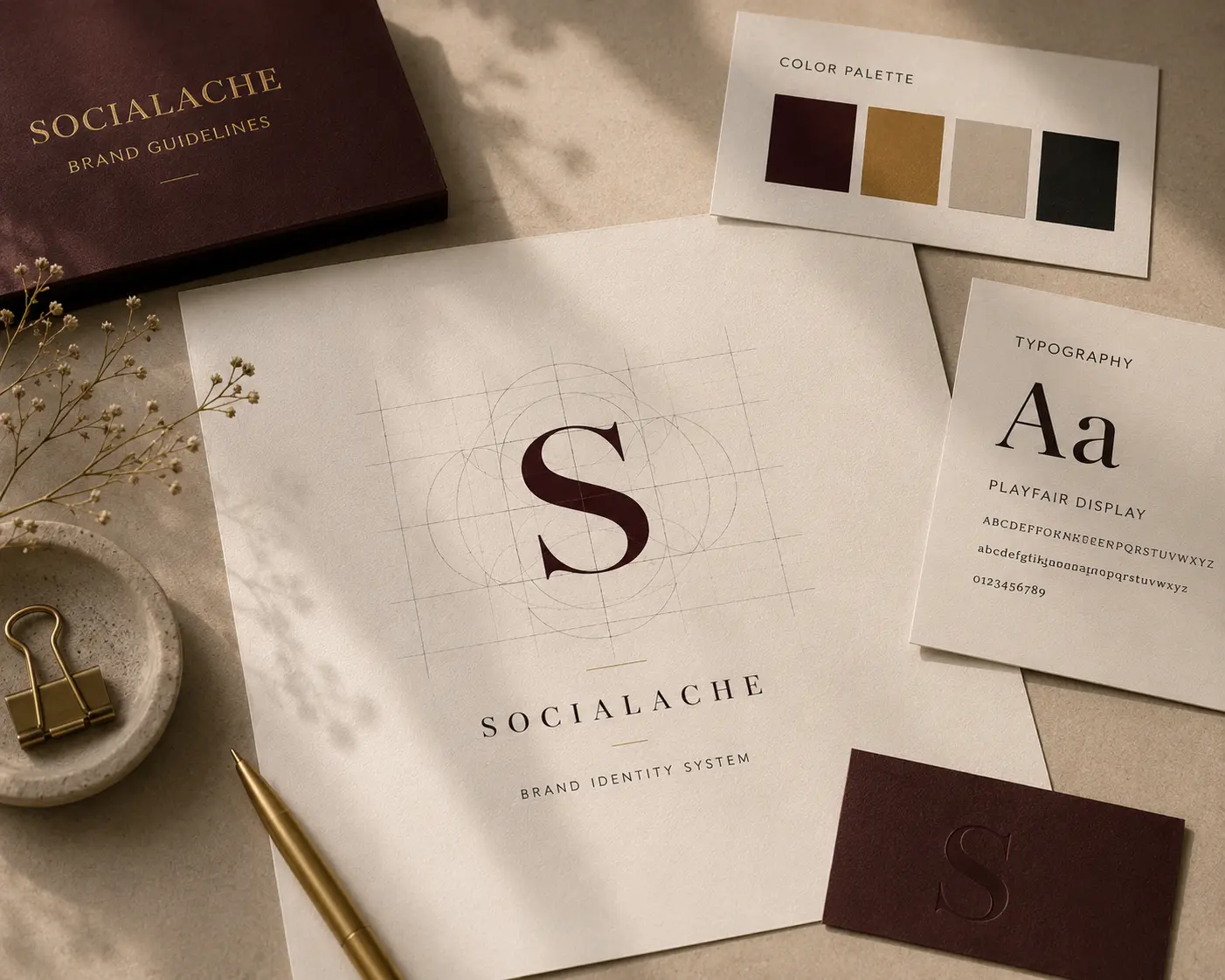
Here's the pattern we see most often. A founder arrives with a product ready, a name just registered, and a logo they made themselves to move fast. They're rarely asking whether they need branding — they're really asking when.
Here's the honest answer to when to start branding: earlier than most founders think, and lighter than most founders expect. Before your first sale, you need clarity on three things — who exactly you're for, what you believe that competitors don't, and what you want to be known for years from now. A logo and color palette can wait. That clarity can't.
The three questions that matter more than a logo
Most founders hear "branding" and picture visual identity — a logo, a color palette, a polished website header. That's real, but it's the surface, not the foundation. Before you're ready for any of that, you need answers to:
- Who exactly are we for? Not "everyone who needs X" — one specific person with a specific problem.
- What do we believe that our competitors don't? Not "quality" or "trust" — something a real competitor would actually disagree with.
- What do we want to be known for years from now? Every early decision either builds toward that or works against it.
If you can't answer these three, you don't have a branding problem — you have a clarity problem. And clarity problems get expensive when you try to solve them with design instead of thinking.
When it's genuinely fine to skip branding for now
Two situations where branding can wait:
- You're purely validating an idea. If you're testing whether anyone will pay for something at all, a simple landing page is enough — branding a test is premature.
- You're selling through a platform that owns the trust layer. Marketplace sellers, freelancers on platforms like Upwork, restaurant partners on delivery apps — the platform carries the credibility. Your job there is performance and reviews, not brand narrative.
But if you're building something meant to outlast your first hundred customers — a consultancy, a product, a studio, a real estate brand — the earlier the foundation is right, the less it costs to fix later.
The mistake we see most often
A founder arrives with a product ready to launch, a name registered last week, and wants a full brand identity fast because the launch is close. That's branding before launch done under pressure, not by design — and it's exactly the kind of engagement we've learned to say no to, because the pattern six months later is always the same: the website copy doesn't match the sales pitch, the social presence looks polished but says nothing distinct, and the founder stops handing out the business card because it no longer represents the business accurately.
The real cost isn't a future redesign. It's the confusion the business broadcasts to every customer in between.
Think in scale, not geography
We're based in Gurgaon, and we know the local ecosystem well. But most of the founders we work with aren't searching "branding agency Gurgaon" — they're searching "best branding agency in India" or "brand identity cost India," because they're building a new business with NRI investors, international partners, or markets outside India entirely. In that context, "Gurgaon" isn't the credential that matters. "India," and the ability to think at that scale, is.
The founders who scale cleanest don't treat this as a local exercise — they treat it as strategic thinking, not design shopping. The visual work is usually the fastest part; the discovery and narrative work underneath it is what determines whether you hold up in that larger room.
Common questions
Can I start with just a logo?
Yes — a simple, consistent logo plus a clear answer to the three questions above is enough to operate professionally in your first stage. The bigger risk at this point usually isn't too little branding, it's an overbuilt identity you don't fully understand or can't maintain consistently. A plain wordmark you actually get is worth more than a system you don't.
What's the actual cost of branding too early?
Beyond the direct spend, you're paying for certainty you don't have yet. Early branding decisions made without real customer feedback almost always get revisited once the market teaches you what your business actually is — not a failure, just paying twice for the same lesson.
How do I know when to move from basic to full branding?
You'll feel it. Concretely: you have repeatable customers, a validated offer, and you're heading into a conversation — an investor, a partner, a larger client — where how you present matters as much as what you sell. That's when the surface needs to match the substance.
Once you have clarity on these three questions, the next challenge is writing it down. Here's how to write your brand story when you're not a writer. If you've already got a logo but no strategy behind it, here's how to know if you're decorating or investing. And if you're wondering whether branding and your first website are the same decision, here's whether you actually need a website on day one.
When your business is ready for a real brand system — not before — that's exactly what we build at Socialache. We work with founders on a minimum 6-week engagement from our Gurgaon brand management studio. Book a clarity call — we'll tell you honestly if you're ready for a full identity build, or if you need something narrower first.
Continue Reading
Related writing from the journal.
Have a project that needs this level of thinking?
We write about what we build. If you need brand, web, or document systems with the same degree of structure and clarity, start a conversation.