What Documents Does a New Business Actually Need First?
The minimum viable document set for first-time founders — and the order that actually matters.
Nidhi Dhruv
Founder | Brand Consultant
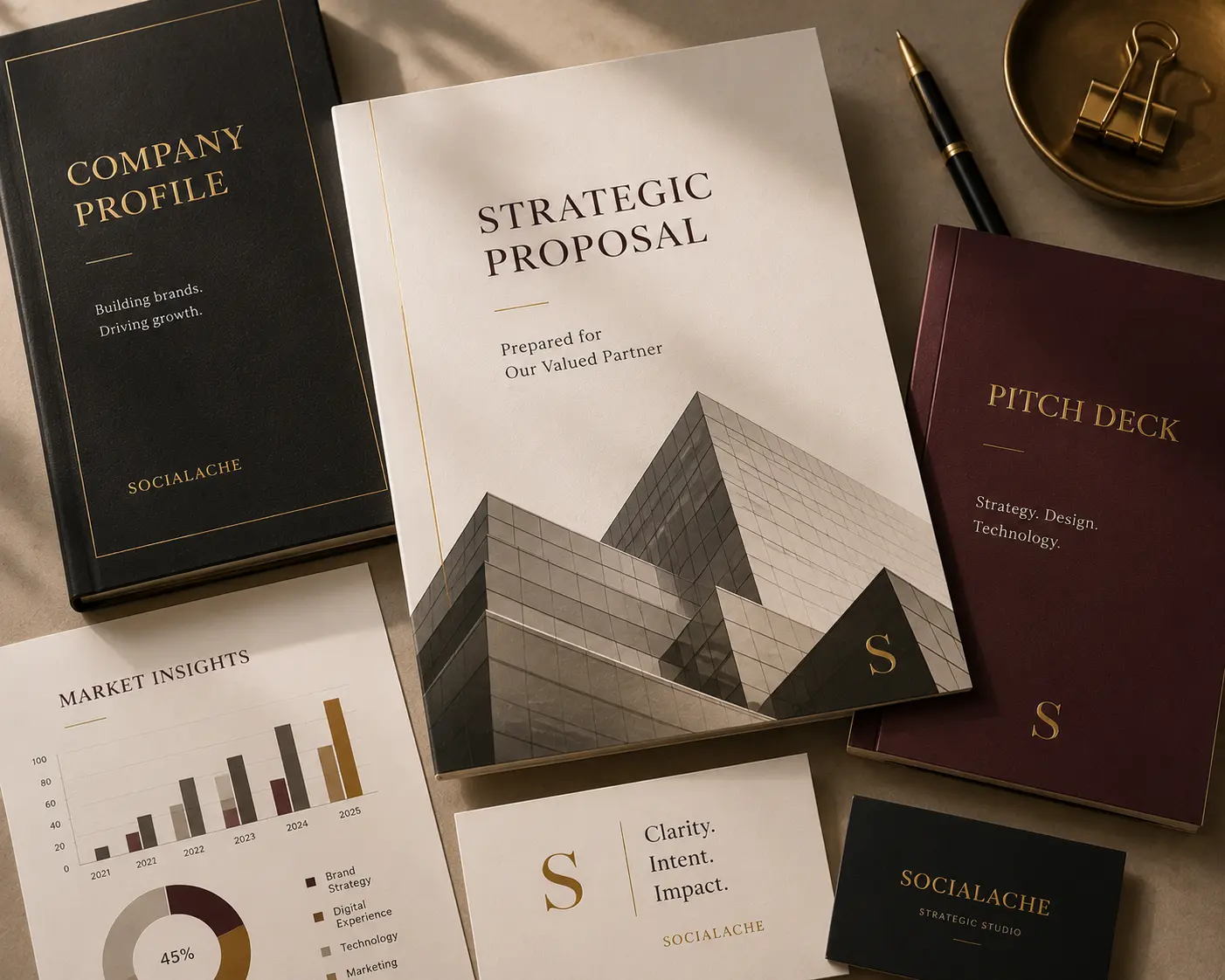
First-time founders in India often ask for a business plan when they need a one-pager, or build a 40-slide deck when they need a partnership brief. The document set you need depends on who is reading it and what decision they are making — not on what a template site told you to download.
The minimum viable document set
Before anything else, most new businesses need three things in writing:
- Positioning summary — who you serve, what you do, why you exist. One to two pages. This is the source document everything else pulls from.
- Capability or product narrative — how you deliver, what makes your method credible, what a customer or partner gets.
- Meeting-ready leave-behind — a PDF or deck that survives the conversation when you are not in the room.
Legal registrations, GST, and compliance paperwork are non-negotiable operationally — but they are not strategic documents. Do not confuse filing requirements with the documents that win trust.
What to build when
- Pre-revenue, pre-funding: positioning one-pager + simple pitch narrative. Enough to explain yourself to a mentor, early customer, or co-founder.
- Early partnerships: partnership or product brief — we built this for CareerBytes, a career intelligence platform, when the conversation was about collaboration structure and product narrative, not investor returns.
- B2B credibility: corporate profile or capability statement — for NFPL, an engineering firm, the need was technical seriousness without a dry compliance dump. Proof of method, selective project context, and language that sounds like engineers, not marketers.
- Raising capital: pitch deck tuned to the room — see pitch deck vs business plan for which format fits.
The order that actually matters
Write positioning before you design anything. Design the leave-behind before you chase investors. Get the narrative right before you worry about slide transitions. Founders who skip this order end up with beautiful PDFs that contradict each other — and that contradiction is what investors and partners notice first.
Documents are not separate from brand
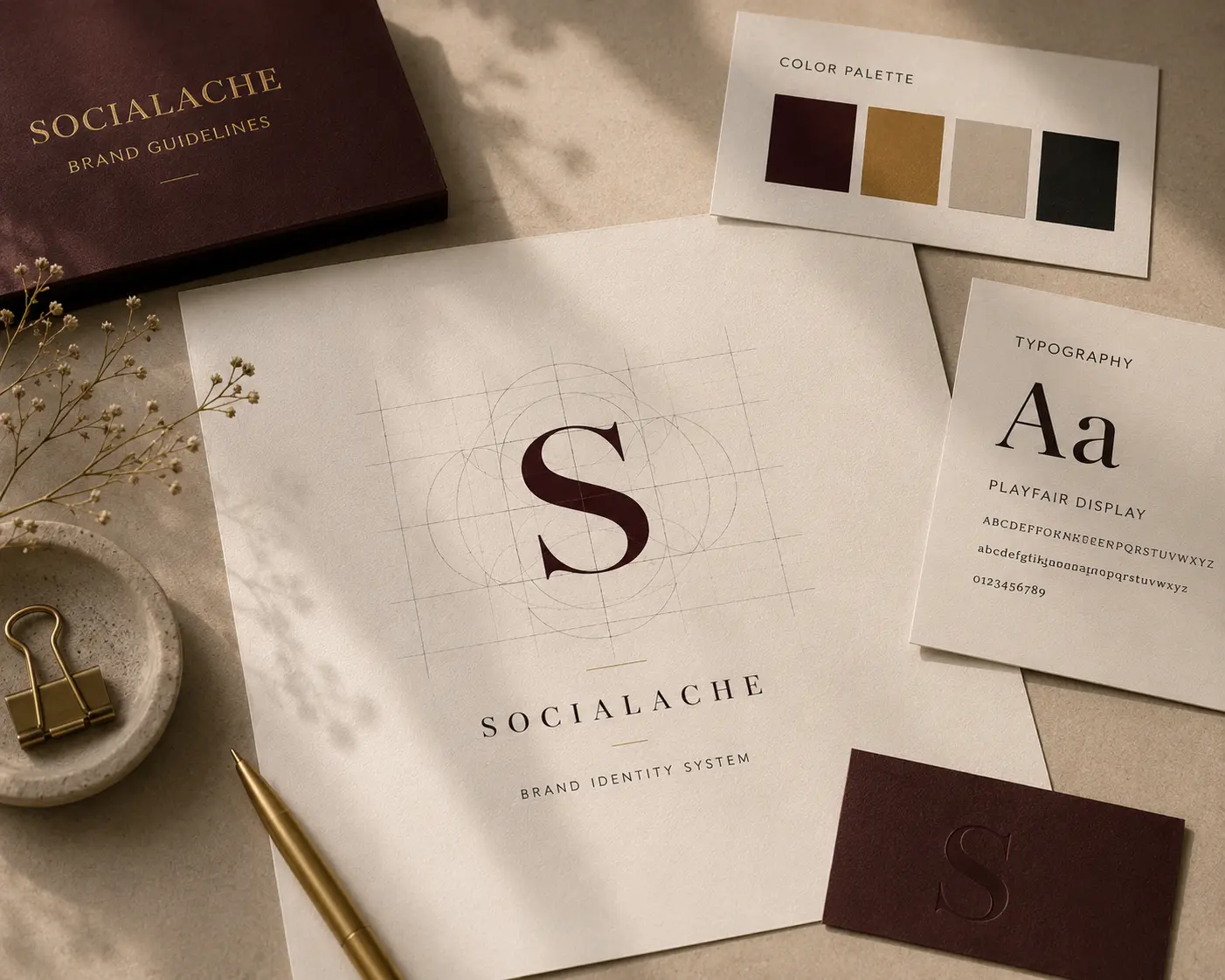
If you have been working through when to start branding, treat your first strategic documents as brand in written form. Same clarity questions, different format. When visual identity arrives later, it should match language you already believe.
What you can skip for now
You do not need a 30-page business plan unless a lender explicitly requires it. You do not need a polished annual report before you have a year to report. You do not need investor-grade financial modelling before you have a repeatable offer. Build the document that unlocks the next real conversation — then build the next one.
Pitching without traction? Read how to pitch with no funding history. Choosing between formats? Compare pitch deck vs business plan.
We build strategic documents that earn trust before the meeting — corporate profiles, pitch narratives, and partnership briefs with the same rigour we bring to brand and web. See pitch deck design in Gurgaon, or book a clarity call to scope what you actually need first.
Continue Reading
Related writing from the journal.
Have a project that needs this level of thinking?
We write about what we build. If you need brand, web, or document systems with the same degree of structure and clarity, start a conversation.