How to Pitch Your Business When You Have No Funding History Yet
A practical framework for first-time founders who need to build credibility without traction numbers.
Nidhi Dhruv
Founder | Brand Consultant
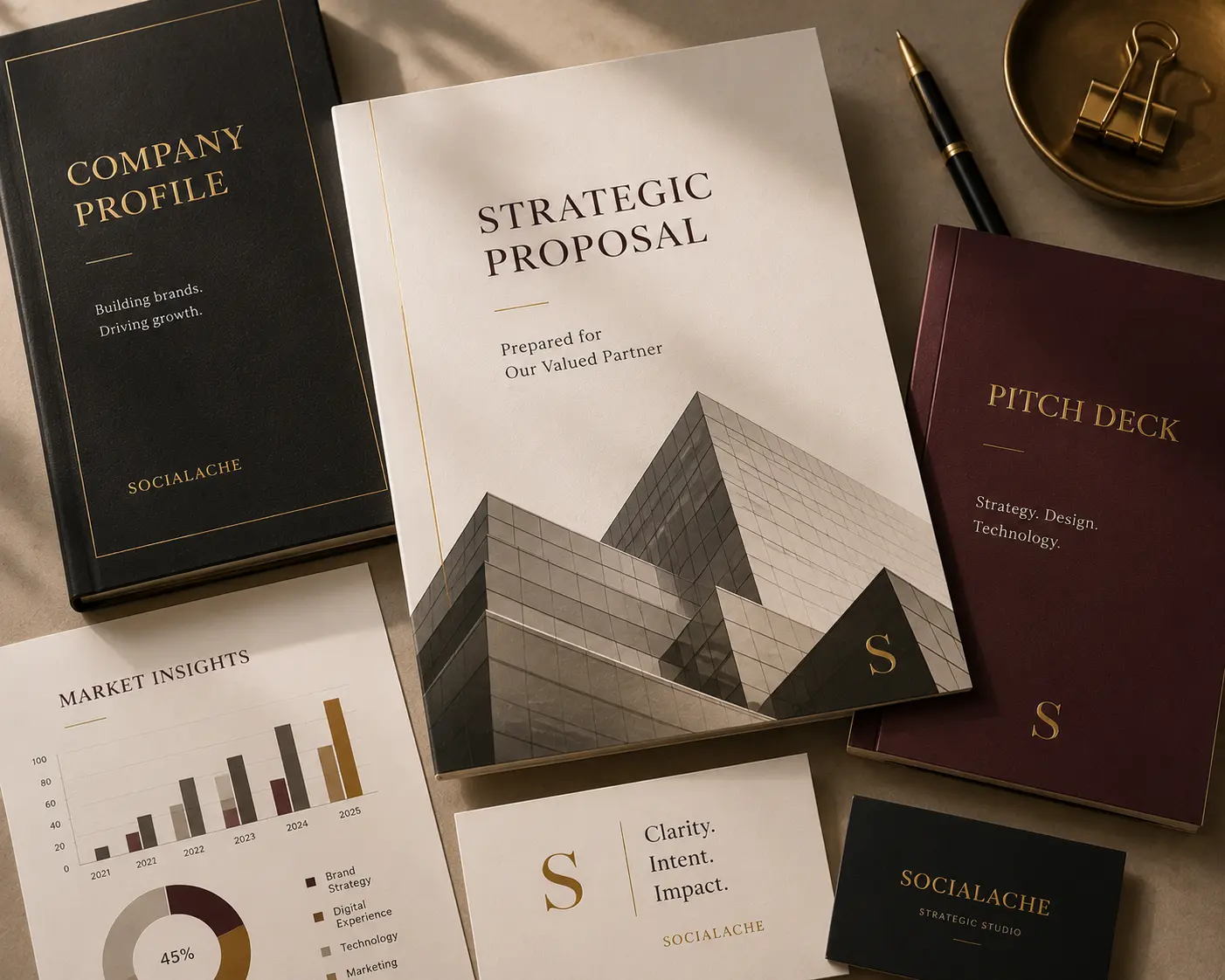
You do not have revenue charts. You do not have a Series A logo on your cap table. You might not even have a product in market. And someone asked you to send a deck by Friday. This is the most common pitch situation we see from first-time founders in India — and the most mishandled.
What investors are actually evaluating
Without traction, investors are not buying your numbers. They are buying three things: clarity of thought, credibility of the founder, and plausibility of the path. Your deck has to make all three feel inevitable — not hyped.
A framework that works without metrics
- Problem specificity. Not "education is broken" — one painful moment for one specific user you understand deeply.
- Why you. Founder-market fit told as a story, not a resume list. What did you see that others missed?
- Method, not magic. How you will get the first ten customers, not how you will capture 10% of a ₹50,000 crore market.
- Honest stage. Name what you have (prototype, LOI, pilot conversation) and what you do not. Investors respect self-awareness.
- The ask, precisely. What the money buys and what milestone it unlocks. Vague "growth capital" requests signal vague thinking.
Emotional resonance without hype
Early decks fail in two directions: too dry (slides of bullet points nobody remembers) or too inflated (market sizes that make experienced investors roll their eyes). The middle path is specific and human. Show the problem through a real person. Show your solution through a real workflow. Show your ambition through a credible next step, not a hockey stick.
The best early-stage pitch makes an investor feel "I would back this person even if the idea pivots" — not "this spreadsheet is aggressive."
Documents before decks
If you cannot explain the business in a two-page narrative, a deck will not save you. Start with the document set in what documents a new business needs — positioning first, slides second.
Common early-stage pitch mistakes
- Leading with solution before problem.
- Competitor slides that dismiss everyone as "legacy."
- Financial projections with no assumptions stated.
- Team slides that list titles without showing why this team for this problem.
- No clear use of funds — the question every investor asks first.
When you are pitching globally
If your investor is in Minnesota and your business is in Gurgaon, the credibility bar shifts — currency, market context, regulatory framing, and how you present India-scale opportunity without sounding like a template. We cover that in pitching global investors from India.
Watch for the credibility killer in why most strategic documents overpromise — especially if you are tempted to use AI to fill gaps in your story.
We help first-time founders build pitch narratives that earn the meeting — clear, honest, and designed for the room you are actually in. Start with our pitch deck design in Gurgaon overview, or book a clarity call to talk through your deck before you send it.
Continue Reading
Related writing from the journal.
Have a project that needs this level of thinking?
We write about what we build. If you need brand, web, or document systems with the same degree of structure and clarity, start a conversation.