When Do You Need a Proper Pitch Deck vs. a Simple Business Plan?
The decision framework that stops founders from building the wrong document for the wrong room.
Nidhi Dhruv
Founder | Brand Consultant
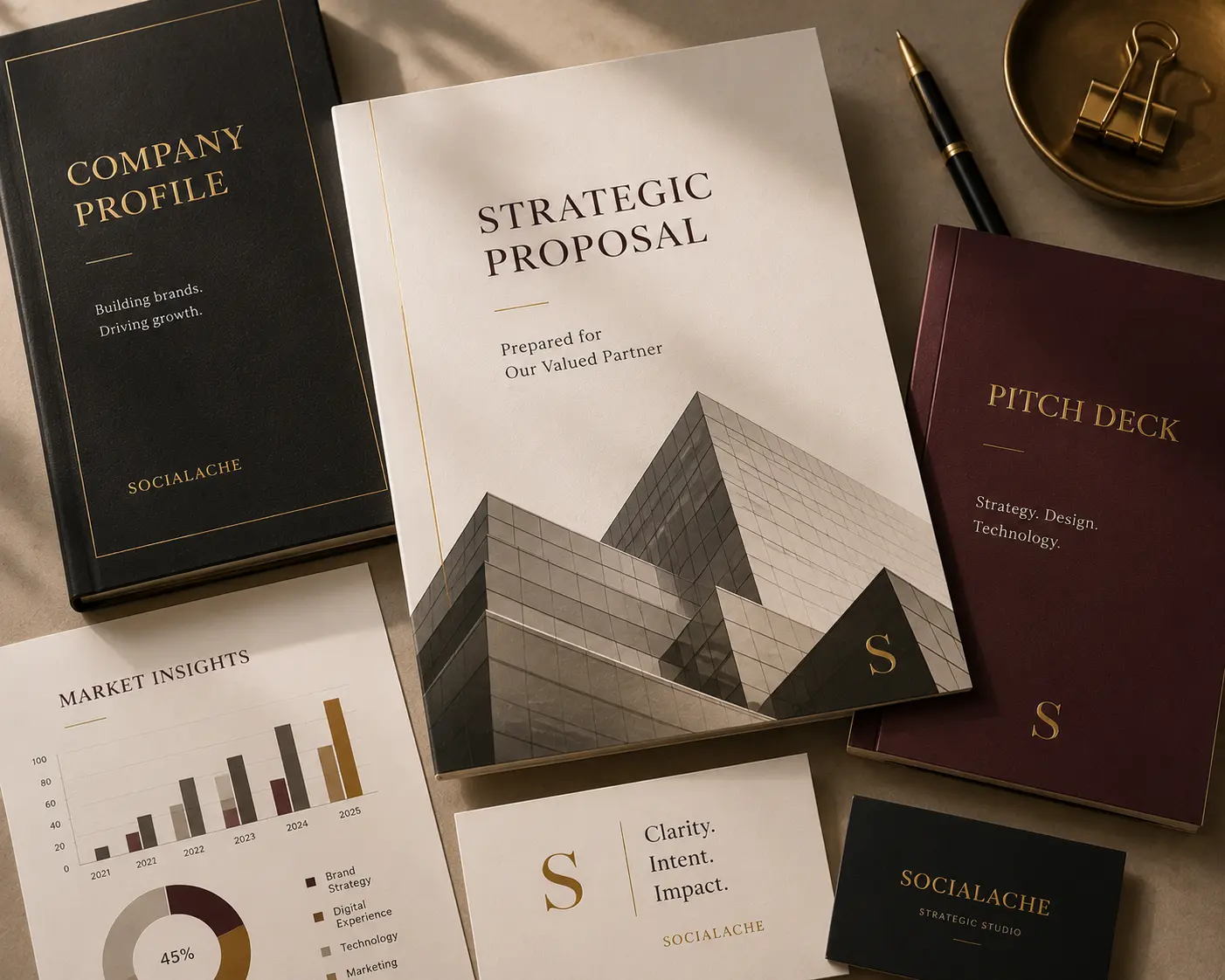
Founders often treat "pitch deck" and "business plan" as interchangeable. They are not. They serve different readers, different decisions, and different stages. Building the wrong one wastes weeks and signals that you do not understand the room you are walking into.
What each document actually does
Pitch deck: a visual narrative for a live or async conversation — usually 10–15 slides, designed to be presented. Goal: earn the next meeting or the term sheet conversation.
Business plan: a written operating document — often 15–40 pages — covering market, operations, financials, and milestones in detail. Goal: prove you have thought through execution, often for lenders, grants, or internal planning.
Decision framework
- Raising angel or VC? Pitch deck. Investors want narrative, team, market insight, and a clear ask — not a 30-page essay.
- Applying for a bank loan or government scheme? Business plan. They want financials, collateral context, and operational detail.
- Early partnership conversation? Neither, usually — start with a partnership brief or one-pager. See what documents a new business needs.
- Internal planning with co-founders? Business plan lite — milestones, roles, and financial assumptions without slide polish.
- Global investor on Zoom? Pitch deck tuned to their context. See pitching global investors from India.
The overlap that confuses founders
Both documents cover market, competition, and financials. The difference is depth and format. A deck summarises; a plan substantiates. A deck is read in ten minutes; a plan is read over an hour with a pen. Trying to cram a business plan into slides produces unreadable decks. Trying to present a business plan produces meetings that lose the room by slide four.
The shared failure mode
Both formats suffer from the same credibility killer: overpromising. Aggressive projections, vague market sizing, and claims you cannot defend in a follow-up question. We break this down in why most strategic documents overpromise — and it applies whether your document has slides or chapters.
What to build first
- Write a positioning one-pager (who, what, why, proof).
- Decide the room: investor, lender, partner, or internal.
- Build the format that matches — deck for pitch, plan for diligence.
- Pressure-test with someone who will ask hard questions before you send it.
When you need both
Later-stage raises sometimes require a deck for the meeting and a data room with a detailed plan, financial model, and supporting documents. But early on, one well-built document beats two mediocre ones. Pick the format that unlocks your next real conversation.
No traction yet? Read how to pitch without funding history. Worried your deck sounds too good to be true? See how to avoid overpromising.
We help founders build the right document for the right room — pitch decks, business plans, and the positioning work underneath both. See pitch deck design in Gurgaon, or book a clarity call to figure out which format you need first.
Continue Reading
Related writing from the journal.
Have a project that needs this level of thinking?
We write about what we build. If you need brand, web, or document systems with the same degree of structure and clarity, start a conversation.