Why Most Strategic Documents Overpromise — and How to Avoid It
The credibility-killing mistake hiding in most pitch decks and business plans, and the fix that builds investor trust.
Nidhi Dhruv
Founder | Brand Consultant
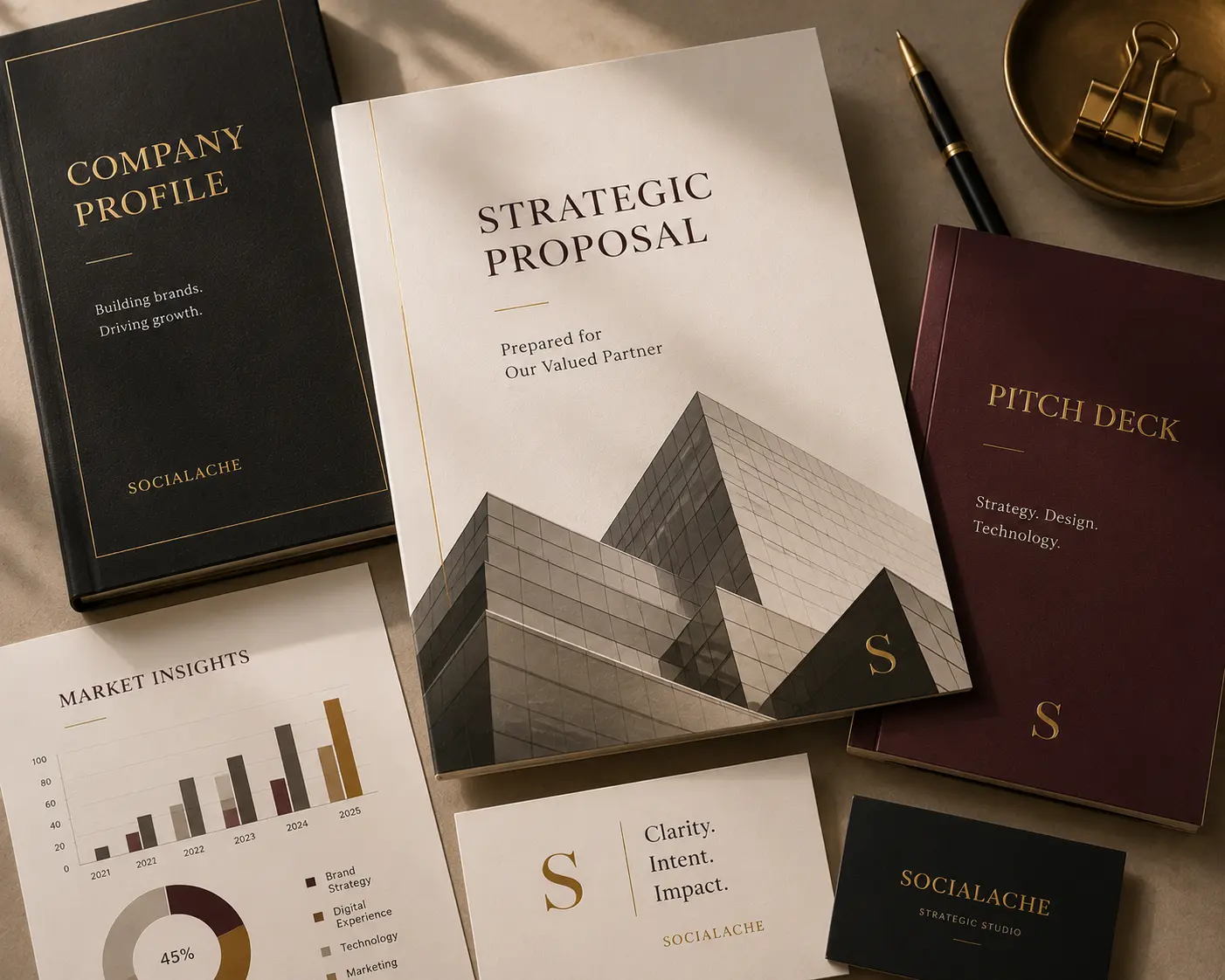
The most common reason a pitch deck fails is not bad design. It is that the founder promised more than they can defend. Experienced investors smell it in the first three slides — and once credibility is gone, no amount of polish recovers the meeting.
What overpromising looks like
- Market size slides with no methodology — just a big number from a report.
- Revenue projections that assume adoption without stating assumptions.
- Competitive slides that claim "no direct competitors."
- Traction language that conflates conversations with commitments.
- Vision statements that sound like the company already operates at scale.
None of this requires bad intent. Founders overpromise because they are optimistic, because templates encourage hockey sticks, and because AI tools now generate confident-sounding claims faster than anyone can fact-check them.
Why AI makes this worse
AI-generated pitch decks are the new version of a problem we already knew: polish without substance. Tools can produce a 15-slide deck with market analysis, competitive positioning, and financial projections in minutes. The output sounds authoritative. It is often unverifiable. Investors are adapting — and the founders who rely on generated claims without understanding them are the ones who fail diligence. This connects directly to why AI-polished branding is becoming a liability.
A document that overpromises does not just fail the meeting. It trains investors to distrust everything else you send.
How to build trust instead
- State assumptions explicitly. "We assume 5% conversion from trial to paid" is credible. A revenue chart with no footnotes is not.
- Name what you do not know. "We have not yet tested pricing in Tier-2 cities" shows maturity.
- Use proof, not adjectives. One pilot result, one LOI, one customer quote — each beats a page of superlatives.
- Match the document to the stage. Early decks should sound early. See pitching without funding history.
- Pressure-test before you send. Have someone ask "how did you get this number?" for every claim.
Decision-grade documents
We use the phrase "decision-grade" internally: a document that helps the reader make a real decision — invest, partner, buy — because it is specific, honest, and structured for their context. That is what we built for CareerBytes (partnership narrative) and NFPL (corporate profile): documents that earn trust by showing method, not by inflating outcomes.
The right format matters too
Overpromising shows up differently in pitch decks vs business plans — but it shows up in both. Choosing the wrong format for the room makes the problem worse. See pitch deck vs business plan for which document fits which conversation.
The fix is not less ambition
Founders sometimes hear "do not overpromise" and sand down their vision until the deck sounds timid. That is not the answer. Be ambitious about the problem and honest about the stage. Investors back founders who see large opportunities and tell the truth about where they are on the path.
Starting from scratch? See what documents a new business needs first. Pitching globally? Read our guide for Indian founders raising from global investors.
We build strategic documents that earn trust — pitch decks, profiles, and narratives that are ambitious and defensible. Start with pitch deck design in Gurgaon, or book a clarity call for an outside read before you send the deck.
Continue Reading
Related writing from the journal.
Have a project that needs this level of thinking?
We write about what we build. If you need brand, web, or document systems with the same degree of structure and clarity, start a conversation.